
LaGrange, GA and The Surrounding Area

Have Questions? Email Us

7 AM – 6 PM
LaGrange, GA and The Surrounding Area
Have Questions? Email Us
7 AM – 6 PM
Call For A Free Estimate

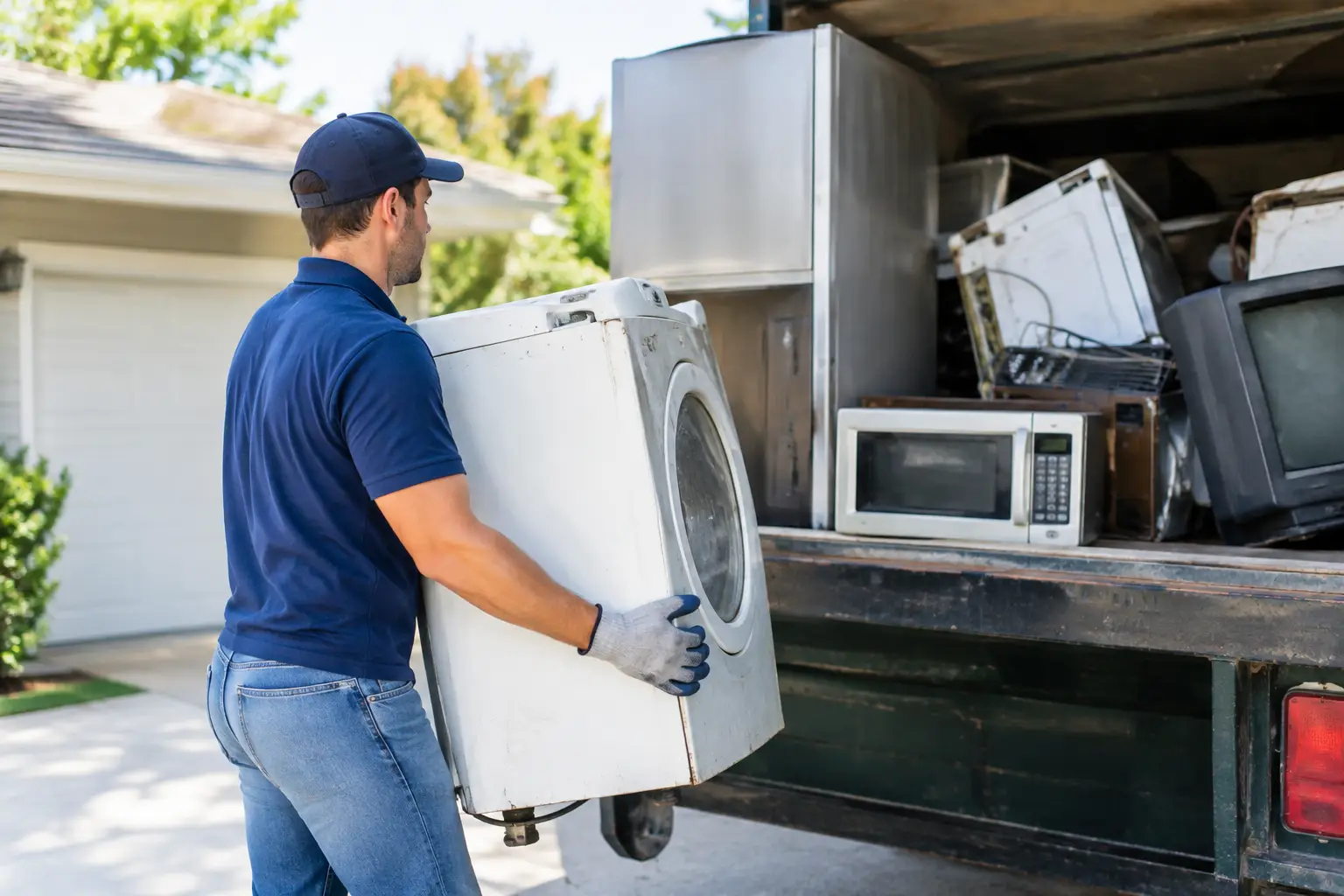
A dead refrigerator in the garage or a washer that quit mid-cycle can turn into a bigger headache than expected. Figuring out how to discard broken appliances is not as simple as setting them at the curb. Many appliances are heavy, contain recyclable metals, or have components that require special handling before they can be hauled away.
The right disposal method depends on what the appliance is, where you live, and whether it contains refrigerant, batteries, or electronic parts. A little planning protects your property, helps you avoid an unsuccessful curbside pickup, and gets the item out of your way without a long weekend of lifting.
“Appliance” covers a wide range of items. A countertop microwave does not need the same approach as an old refrigerator, and a broken dryer is handled differently than a window air conditioner.
Large household appliances, often called white goods, include refrigerators, freezers, washers, dryers, ovens, dishwashers, water heaters, stoves, and ranges. These are usually made with valuable steel, aluminum, copper, and other materials that can be recycled. Their size and weight, however, make do-it-yourself transport difficult.
Smaller appliances include microwaves, coffee makers, blenders, toaster ovens, dehumidifiers, and vacuum cleaners. Some may fit in a vehicle, but that does not always mean they belong in household trash. If an item has electrical components, a battery, or a circuit board, check local disposal guidance before putting it in a bin.
Before moving anything, unplug the appliance and make sure it is disconnected from water, gas, or drain lines. This step matters most with washing machines, dishwashers, ice makers, water heaters, and gas ranges. Shut off the appropriate supply line first, then have a qualified professional handle any connection you are not comfortable disconnecting.
Empty the appliance completely. Remove food from refrigerators and freezers, drain water from washers, and clear out lint traps, filters, or removable trays. Let a freezer thaw with towels nearby to catch water. A dry, empty appliance is safer to move and much more pleasant for anyone handling it.
Secure loose doors, drawers, and cords before transport. Tape doors shut if the appliance is being moved through a home or loaded into a truck. For a refrigerator or freezer that will sit outside before pickup, remove the doors entirely when possible so children and animals cannot become trapped inside.
Never try to drag a heavy appliance by yourself. Refrigerators, washers, and dryers can damage flooring, chip door frames, and cause serious back injuries. Use an appliance dolly, moving straps, and at least one other capable adult if you plan to move it. If there are stairs, a tight hallway, or an appliance that has been sitting in a crawlspace or basement, full-service removal is usually the safer choice.
Cooling appliances deserve extra attention because they may contain refrigerant. Refrigerant must be recovered properly before the appliance is recycled or disposed of. It should not be released into the air, and most scrap facilities will not accept a refrigerator, freezer, dehumidifier, or air conditioner without proper handling.
If the unit still runs, do not cut lines or take it apart to reach scrap metal. Call an appliance service professional, a recycling program, or a junk removal company that knows how to arrange compliant disposal. In some areas, the utility provider may offer a pickup or rebate program for old working refrigerators and freezers, though those programs often have condition and size requirements.
A broken unit can still be recyclable. The difference is that its refrigerant and other regulated components need to be managed before the metal shell can enter the recycling stream.
Your best route depends on local rules, the item’s condition, and how quickly you need it gone. Curbside bulk pickup can be convenient, but it is not automatic. Many cities and counties require residents to schedule ahead, place the item out on a specific date, or remove doors from certain appliances. Some curbside programs will not take appliances with refrigerant or electronics.
A landfill or transfer station may accept appliances, sometimes for a separate fee. Call before loading the item. Ask whether they take the exact appliance, whether refrigerant certification is required, what the fee is, and whether proof of residency is needed. That short call can save an unnecessary trip with a 200-pound washer in the back of a truck.
Scrap metal recyclers may accept washers, dryers, stoves, water heaters, and other metal-heavy items. The trade-off is that you usually need to deliver the appliance yourself, and acceptance rules vary. Refrigerators and air conditioners may be accepted only after refrigerant recovery.
Retailer haul-away is another option when you are replacing an appliance. Some delivery services remove the old unit when they bring the new one. Confirm the service when you place the order, since it may cost extra and may not be available for every product or location.
For homeowners, landlords, property managers, and contractors dealing with more than one item, a local junk removal crew can be the most practical option. Instead of renting a truck, finding help to lift, and sorting through facility rules, the crew handles removal from the room, garage, storage area, or curb. JBC Junk Removal provides this kind of fast, friendly appliance pickup across West Georgia and nearby East Alabama communities.
It can be tempting to put a broken appliance by the road and hope someone takes it. That can create several problems. It may violate local ordinances, block a sidewalk, attract illegal dumping, or leave a hazardous item exposed to weather. If the appliance is not collected, you are still responsible for getting it removed.
Curb placement is only a good option after you have confirmed the pickup date and instructions. Keep the appliance on your property until the approved collection window. Do not place it near power lines, mailboxes, fire hydrants, or traffic lanes.
Not every appliance that stops working is truly finished. A dryer with a failed belt, a dishwasher with a worn latch, or a refrigerator with a replaceable part may be worth repairing. Get an estimate first, then compare it with the appliance’s age, expected remaining life, and the cost of a replacement.
Donation is only appropriate for appliances that are clean, safe, and working properly. Most charities will not accept broken machines because repair costs and liability can outweigh the item’s value. Be honest about the condition if you offer an appliance to a neighbor or post it for free pickup. A clear description such as “not working, for parts only” prevents frustration and unsafe assumptions.
Once you have chosen a disposal method, clear a path to the appliance. Move rugs, small furniture, and fragile items out of the way. Measure tight doorways if you are replacing a built-in unit or moving a large refrigerator out of a narrow kitchen.
Let the removal team know about stairs, gates, long driveways, or difficult access before they arrive. These details help the job go smoothly and allow for a more accurate estimate. If you have several items – such as an old washer, dryer, mattress, and garage clutter – scheduling them together may be more efficient than arranging separate pickups.
A broken appliance does not have to sit in your home for months while you figure out the rules. Handle the connections safely, choose a disposal option that accepts the item, and get help when the lifting or special handling is more than a one-person job. Clearing it out is one less thing standing between you and a usable home, rental, or work space.