
LaGrange, GA and The Surrounding Area

Have Questions? Email Us

7 AM – 6 PM
LaGrange, GA and The Surrounding Area
Have Questions? Email Us
7 AM – 6 PM
Call For A Free Estimate

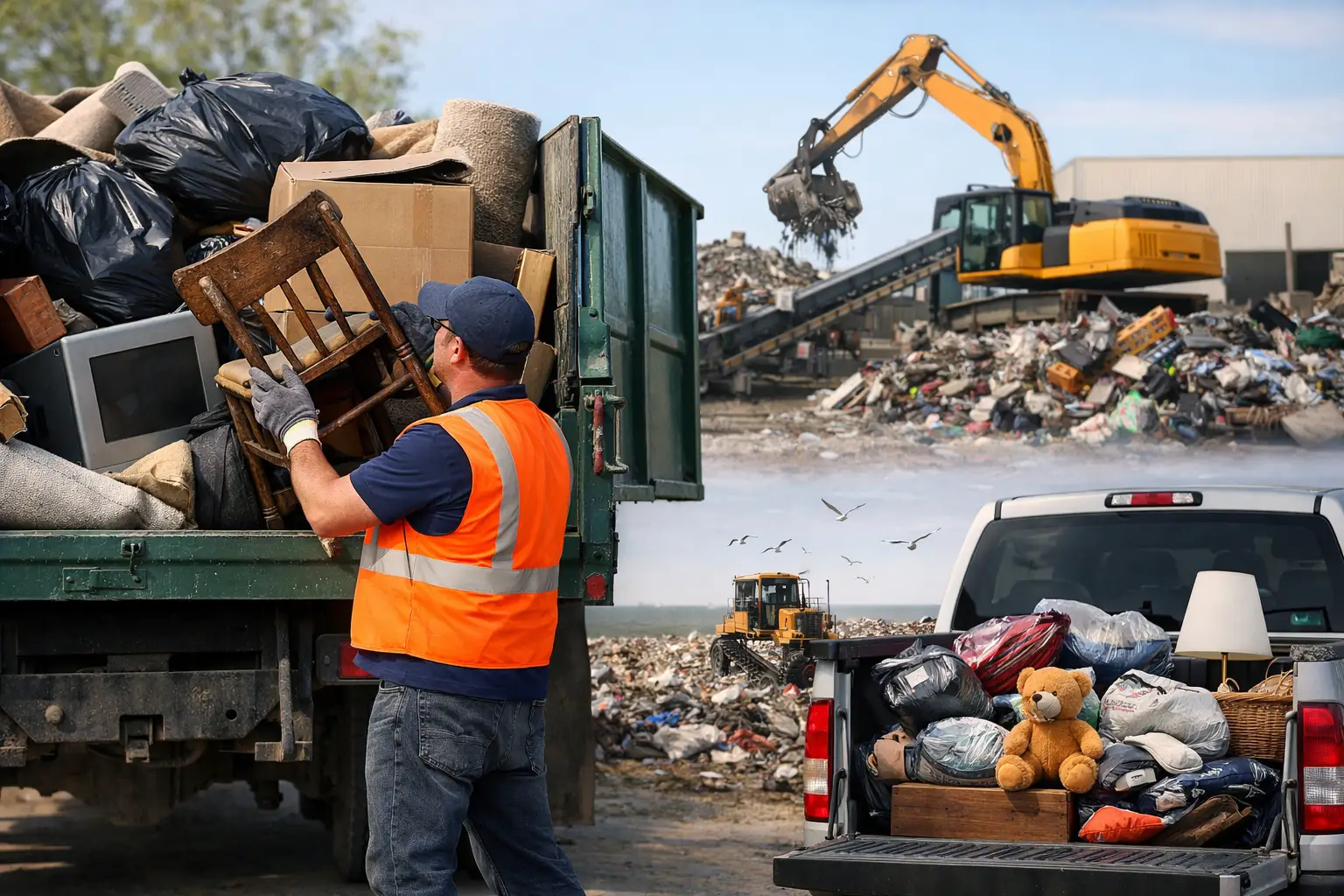

That old couch, broken appliance, pile of renovation debris, or garage full of boxes does not just disappear after pickup. A lot of people ask what do junk removal companies do with the junk, and the honest answer is that it depends on what the material is, what condition it is in, and what local disposal options are available.
A good junk removal company does more than load a truck and head for the nearest dump. The job usually involves sorting, separating usable items from true trash, identifying what can be recycled, and making sure disposal happens the right way. For homeowners, landlords, contractors, and property managers, that matters because you want the mess gone, but you also want it handled responsibly.
Once items are loaded, the next step is usually sorting. Not every load is treated the same. A cleanout from an estate, a foreclosure, a retail space, or a construction site can include a mix of furniture, metal, cardboard, electronics, yard debris, mattresses, broken household goods, and plain garbage.
That mix has to be separated because different items go to different places. Usable items may be set aside for donation when possible. Recyclable materials may go to facilities that handle metal, cardboard, or certain plastics. Green waste may be taken where yard debris is accepted. Materials that cannot be reused or recycled often end up at a transfer station or landfill.
This is one reason full-service junk removal saves people time. It is not just heavy lifting. It is also the work of figuring out what goes where.
Most junk removal loads are divided into a few basic categories. The first is donation. If a dresser, table, chair, or working appliance is still in decent shape, some companies will try to route it toward a donation channel instead of treating it as trash. That is never guaranteed, because condition matters, but it is often the best outcome for items with life left in them.
The second category is recycling. Scrap metal is a common example. Old grills, bed frames, shelving, washers, dryers, and other metal-heavy items may be separated from the load because metal can often be recycled. Cardboard, some paper products, and certain electronics may also be handled differently from regular household trash.
The third category is disposal. Some things are simply too damaged, too worn out, too contaminated, or too mixed with other waste to be reused. Torn sofas, moldy mattresses, soaked particleboard furniture, broken toys, food waste, and general bagged trash usually fall into this group.
Then there are specialty items. Tires, paint, chemicals, refrigerators, TVs, computers, and batteries may require specific handling based on local rules. A reputable company knows these materials cannot always be tossed in with everything else.
A lot of customers hope their unwanted items will all go to someone who needs them. That is a good goal, but real-world cleanouts are usually not that simple. Donation centers often have standards about cleanliness, damage, missing parts, stains, tears, pests, recalls, and overall usability.
For example, a dining table with light wear may be reusable. A couch with heavy stains, pet damage, or a broken frame probably is not. A working microwave may have a chance. A rusted one with a frayed cord does not.
That is why junk removal companies have to make judgment calls. The goal is not to claim every item can be donated. The goal is to keep good items out of the landfill when there is a realistic path for them.
People are often surprised by how much sorting goes into recycling. Metal is one of the easier materials because it usually has clear recycling value. Appliances, fencing, bed rails, tools, and some construction debris may contain recoverable metal.
Wood, drywall, insulation, shingles, and mixed job-site debris are a different story. Some construction materials can be recycled in certain markets, but some cannot. The same goes for plastics. Just because something is technically made of plastic does not mean there is a local option that will take it.
So when asking what do junk removal companies do with the junk, the practical answer is this: they recycle what can realistically be recycled in their service area, not what sounds good on paper. That depends on local facilities, fees, contamination levels, and the type of material in the load.
Large property cleanouts tend to produce the widest range of materials. Estate cleanouts may include furniture, clothing, books, old electronics, broken decor, kitchen goods, and years of stored household items. Eviction and foreclosure cleanouts can include bagged trash, damaged furniture, mattresses, spoiled food, and abandoned personal property. Garage, shed, and storage unit cleanouts often uncover paint cans, yard tools, scrap wood, boxes, and rusted equipment.
In those jobs, the crew usually has to make quick but informed decisions. Safe and salvageable items are separated from materials that need disposal. Heavy debris gets loaded efficiently. Loose trash is consolidated. Hazard concerns are watched closely. The goal is to clear the space fast without creating a bigger mess in the process.
For property managers, landlords, and realtors, this matters because speed is only half the job. The other half is making sure the property is actually ready for the next step, whether that is listing, repairs, tenant turnover, or final sale prep.
There are disposal rules for a reason. Electronics can contain materials that should not be dumped carelessly. Refrigerators and certain appliances may need special handling. Paint, solvents, propane tanks, and chemicals can create safety and environmental issues if they are mixed into a general junk load.
A licensed and insured junk removal company should understand that some items require a different process. Sometimes that means an extra trip. Sometimes it means the customer needs to disclose certain materials ahead of time. Either way, clear communication helps avoid surprises on pickup day.
This is one area where hiring a local company can help. A crew that regularly works in West Georgia and East Alabama is more likely to know the local disposal routes, accepted materials, and practical options for common cleanout jobs in the area.
You should expect more than a truck and a labor crew. A dependable company should be upfront about what it can take, what may cost extra, and what has special disposal requirements. If an item can be donated or recycled, great. If it cannot, you should get a straight answer.
You should also expect efficiency. A proper junk removal service handles loading, hauling, sorting, and final drop-off so you do not have to figure out multiple disposal sites yourself. That is especially valuable during move-outs, estate transitions, renovation projects, or rental turnovers when time is already tight.
At the same time, customers should understand that no company can promise every item avoids the landfill. Sometimes disposal is the only realistic option. What matters is whether the company makes a good-faith effort to sort materials responsibly instead of treating everything as garbage from the start.
Asking what do junk removal companies do with the junk is not just curiosity. It tells you a lot about how a company operates. If the answer is vague, rushed, or sounds like everything gets dumped together, that may be a sign to ask more questions.
If the answer includes sorting, donation when possible, recycling where available, and proper disposal for the rest, you are probably talking to a company that takes the work seriously. That kind of process protects your time, helps keep reusable items in circulation, and reduces the chance of problem materials being handled the wrong way.
For a local company like JBC Junk Removal, the goal is simple. Clear the space, do the heavy lifting, and handle the load the right way based on what is actually in it. That is what makes junk removal useful. It is not just about getting rid of clutter. It is about turning a stressful cleanup into one less thing you have to chase down yourself.
If you are planning a cleanout, the best next step is to ask what they can take, how they price the job, and how they handle different materials. A good crew will give you a clear answer before the truck ever pulls into the driveway.
One response to “What Do Junk Removal Companies Do With the Junk?”
[…] as you work: items to retain or store according to your legal obligations, items that can be donated or recycled, and true junk. If the property is full of mixed belongings, do not spend hours trying to assign a […]