
LaGrange, GA and The Surrounding Area

Have Questions? Email Us

7 AM – 6 PM
LaGrange, GA and The Surrounding Area
Have Questions? Email Us
7 AM – 6 PM
Call For A Free Estimate

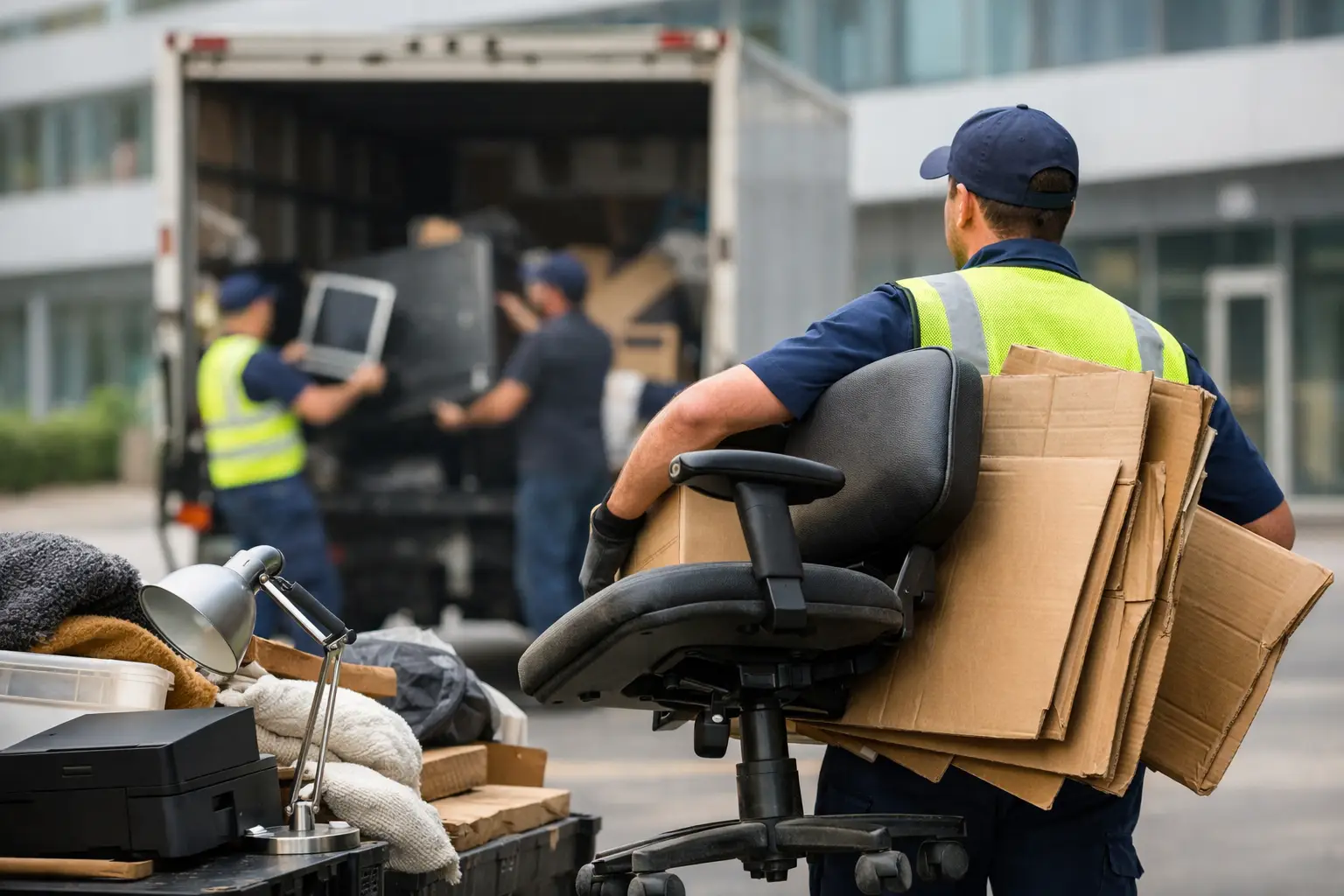

A back room full of broken shelves, a rental property between tenants, stacks of old office furniture after a remodel – this is usually when people start asking, what is commercial junk removal? In plain terms, it is a service that helps businesses, property managers, landlords, contractors, and other commercial customers get unwanted items, debris, and bulk trash removed quickly and responsibly without having to do the heavy lifting themselves.
For some jobs, that means hauling away a few desks and chairs. For others, it means clearing an entire storefront, office suite, apartment complex dumpster area, warehouse section, or job site. The basic idea stays the same: a trained crew shows up, removes the junk, loads it, hauls it off, and helps get the space back into usable shape.
Commercial junk removal is used when a business or property needs more than regular trash service can handle. City pickup and standard dumpster service work fine for everyday waste, but they are not built for bulky items, large cleanouts, or one-time piles of material that need to disappear fast.
That is why commercial customers often call for help during office moves, tenant turnovers, renovations, evictions, foreclosures, retail resets, warehouse cleanouts, and construction projects. A restaurant may need old booths and kitchen fixtures removed. A property manager may need abandoned furniture cleared out of an apartment. A contractor may need leftover debris picked up so the site stays clean and on schedule.
In other words, it is not just about junk. It is about solving a cleanup problem that is slowing down business, delaying a turnover, creating a safety issue, or making a property look neglected.
The hauling itself may look similar, but commercial jobs usually come with different pressures. Businesses care about speed, access, scheduling, liability, and keeping operations moving. A homeowner might be flexible on timing. A retail store, office manager, or landlord usually is not.
Commercial junk removal often involves tighter deadlines, larger volumes, and more coordination. A crew may need to work around business hours, loading docks, tenant schedules, or active construction. In some cases, the removal has to happen early in the morning, after hours, or between lease periods so the property can be shown, repaired, or reopened.
There is also more variety in the job itself. One commercial call might be a single appliance pickup from a rental unit. Another could be a multi-unit cleanout with furniture, mattresses, bagged trash, shelving, and yard debris all in one project. That flexibility is a big reason many businesses prefer full-service junk removal over trying to manage labor, trucks, and disposal on their own.
Commercial junk removal covers a wide range of materials, depending on the company and the job. Common items include office furniture, cubicles, desks, chairs, filing cabinets, retail fixtures, shelving, pallets, construction debris, old appliances, mattresses, box springs, carpet, renovation waste, and general bulk trash.
For property managers and landlords, it often includes abandoned tenant items, bagged garbage, broken furniture, and move-out debris. For contractors, it may include drywall scraps, lumber, flooring, cabinets, and other non-hazardous job site materials. For business owners, it can be outdated equipment, storage room clutter, and items left behind after a remodel.
That said, not everything belongs in a junk removal truck. Hazardous materials, certain chemicals, wet paint, and other regulated waste may require a different disposal process. This is one of those areas where it depends on the item, the local rules, and the provider. A good company will tell you clearly what they can take and what needs special handling.
Commercial junk removal is not only for large companies. A lot of the demand comes from small businesses and local property professionals who need fast help without adding more work to an already busy day.
Office managers use it when replacing furniture or clearing storage areas. Landlords call when tenants leave bulky items behind. Property managers need it during apartment turnovers, evictions, and common-area cleanups. Realtors use it to get homes and commercial spaces ready to list. Contractors need it to keep renovation and construction sites moving. Store owners may need old displays, damaged inventory fixtures, or stockroom clutter removed before the next setup.
The common thread is simple: the customer has a space that needs to be cleared, and they do not want employees, maintenance staff, or subcontractors losing time on hauling work.
Most commercial junk removal jobs start with a quick conversation about what needs to go, where it is located, and how much volume is involved. From there, the customer gets an estimate, either based on photos, an on-site visit, or a description of the load.
Once scheduled, the crew arrives with the labor and truck space needed for the job. They remove the items from the office, suite, storefront, curb, warehouse, unit, or job site, load everything up, and haul it away. On full-service jobs, the customer does not need to drag items outside or organize the pile first unless they want to.
For repeat users, the setup can be even easier. Property managers, apartment communities, and commercial operators sometimes schedule recurring pickups for bulk items, overflow trash, or regular cleanout needs. That can be a better fit than waiting until the problem gets bigger.
One of the first questions businesses ask is what the service costs. In most cases, pricing depends on volume, labor, item type, site access, and how difficult the removal is.
A few lightweight items from a first-floor office will usually cost less than clearing a packed upstairs suite with heavy furniture and demolition debris. Time matters too. If a crew has to sort through scattered material, remove items from multiple units, or work around tight access, the price can reflect that added labor.
The good news is that commercial junk removal is often more cost-effective than people expect once they factor in truck rental, fuel, disposal fees, employee time, and the risk of injury from lifting heavy items. For many businesses, paying for a professional crew is less about luxury and more about efficiency.
There are times when in-house cleanup works fine. If you have one or two small items, enough staff, and a legal way to dispose of everything, handling it yourself may be reasonable.
But large or awkward cleanouts are where professional help usually pays off. If the items are heavy, the timeline is short, the property needs to be rent-ready, or the debris is too much for normal trash service, bringing in a junk removal crew can save a lot of stress. It also helps when appearance matters. A cluttered storefront, office, or rental property sends the wrong message fast.
For local businesses and property professionals, reliability matters just as much as hauling ability. You need a crew that shows up on time, works respectfully around the property, and clears the job without turning it into a bigger project. That is why many customers in West Georgia and East Alabama prefer working with a local full-service company like JBC Junk Removal instead of trying to chase down a national call center.
Before scheduling service, make sure the company is licensed and insured, clear about pricing, and willing to explain what is included. Ask whether labor is part of the quote, whether they remove items from inside the building, and whether there are any materials they cannot take.
It also helps to ask about scheduling flexibility. Some businesses need same-day or next-day service. Others need a pickup coordinated with a tenant move-out, closing date, or construction phase. The right fit is not always the cheapest quote. It is the provider that can handle the job correctly, safely, and on your timeline.
Commercial junk removal is really about keeping properties functional, presentable, and ready for what comes next. Whether you manage rentals, run a small business, oversee renovations, or need a fast cleanout before the next tenant or customer walks in, the best service is the one that clears the mess and lets you get back to work.
One response to “What Is Commercial Junk Removal?”
[…] as part of regular pickup service, estate cleanouts, foreclosure cleanouts, rental turnovers, and business cleanouts. That includes items that still work, items that are broken, and items that are simply too old to […]