
LaGrange, GA and The Surrounding Area

Have Questions? Email Us

7 AM – 6 PM
LaGrange, GA and The Surrounding Area
Have Questions? Email Us
7 AM – 6 PM
Call For A Free Estimate


That spare room full of old boxes usually does not stay a spare room for long. Before you know it, the garage is packed, the guest room is unusable, and you are standing there wondering how much to remove junk from house and whether it is worth hiring help or trying to do it yourself.
The honest answer is that junk removal pricing depends on volume, labor, access, and what needs to be hauled away. A single recliner is a very different job from clearing out an entire home after a move, eviction, or estate transition. Still, there are some common pricing patterns that can help you set realistic expectations before you schedule a pickup.
Most junk removal companies price by how much space your items take up in the truck, how heavy the material is, and how much labor is involved. That means the cost is not just about the number of items. Ten bags of household trash are easier to load than a piano, a shed full of broken tools, and a pile of wet renovation debris.
For smaller pickups, homeowners often pay somewhere around $75 to $200 for a few items, depending on what they are. This might include a mattress, a dresser, a loveseat, or a small pile of garage junk. Mid-size jobs often land in the $200 to $600 range, especially when you are clearing one room, a garage, or part of a basement. Full-house cleanouts can run much higher, often from $800 to several thousand dollars, depending on square footage, volume, and the condition of the property.
That range sounds broad because it is broad. A tidy three-bedroom home with boxed items near the front door is faster and cheaper to clear than a house with years of buildup, heavy furniture upstairs, and debris spread throughout the property.
When people ask how much to remove junk from house, they are usually hoping for one flat number. In real life, a few key factors move the price up or down.
The biggest pricing factor is usually how much space the junk fills in the truck. A quarter-load costs less than a half-load, and a full truck costs more than both. If you are cleaning out a bedroom closet, the price may stay fairly low. If you are emptying a packed garage, attic, and back porch all at once, the estimate will rise quickly.
Not all junk is priced the same. Household clutter, furniture, bagged trash, and yard debris are common and straightforward. Heavy materials like concrete, bricks, roofing shingles, and construction debris often cost more because they add weight, require more labor, and may involve different disposal fees.
Appliances, electronics, mattresses, and tires can also affect pricing because some items need special handling or extra disposal steps.
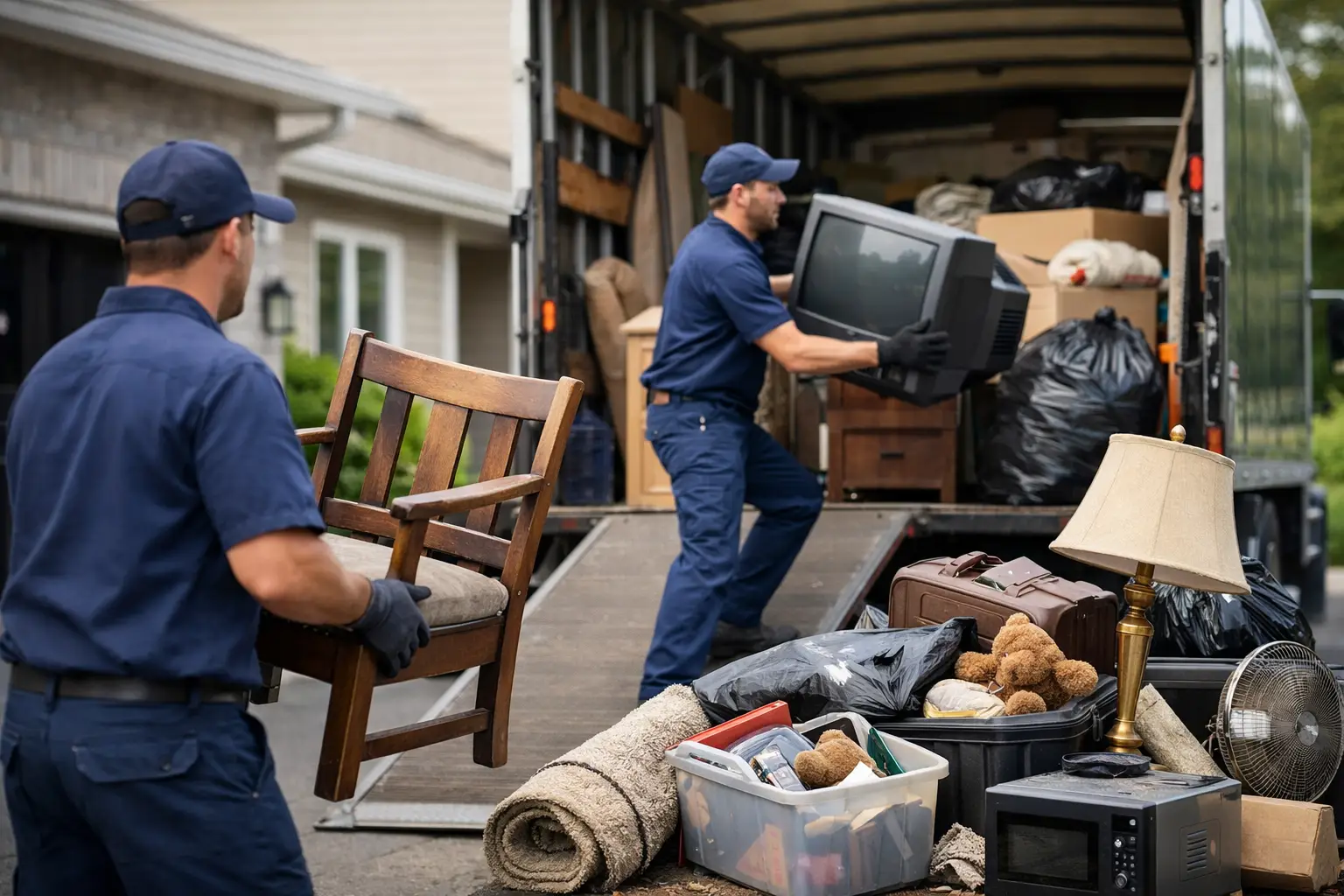
If everything is already gathered in the driveway, the job usually moves faster. If the crew has to go room by room, carry items down stairs, remove bulky furniture from tight spaces, or clean out an overcrowded storage area, labor becomes a bigger part of the cost.
This is one reason two jobs with the same truck volume can be priced differently. The material may be similar, but the time and effort are not.
Easy access helps keep costs down. A house with close parking, wide doorways, and ground-level pickups is simpler than a property with a long walk, steep stairs, narrow halls, or limited truck access. If a crew spends extra time hauling junk from the back of a large lot or maneuvering through an apartment complex, that can affect the estimate.
A standard decluttering job is not the same as an estate cleanout, eviction cleanout, or foreclosure cleanout. Those larger projects often involve multiple rooms, mixed debris, and tighter timelines. Property managers, landlords, and realtors often need fast turnaround, which can also affect scheduling and labor needs.
While every company has its own system, these rough ranges can help you gauge what to expect.
A single-item pickup, such as a couch, mattress, or appliance, often falls between $75 and $175. A small load, like a few pieces of furniture or several bags and boxes, may cost about $150 to $300. A medium cleanout, such as a garage, spare room, or small apartment load, often runs $300 to $700.
Larger cleanouts can move into the $700 to $1,500 range or more. Whole-house jobs, especially after a move-out or estate situation, can exceed that if the home is packed, the debris is heavy, or multiple truckloads are needed.
Those numbers are not a promise, but they are a practical starting point.
A lot of homeowners compare professional junk removal to renting a trailer, borrowing a truck, or making a few dump runs. Sometimes DIY does save money. If you only have a few light items, a free weekend, and easy access to disposal, it may make sense to handle it yourself.
But the math changes fast once you factor in truck rental, fuel, landfill fees, your time, and the physical work. Add a couple of helpers, a heavy sofa, a flight of stairs, and a full day of loading and unloading, and the savings may not be as big as they first appear.
There is also the question of convenience. If you are already dealing with a move, a tenant turnover, a property sale, or a family estate, paying for full-service removal can save a lot of stress. A good crew does not just haul junk away. They save you from the lifting, sorting, hauling, and repeat trips.
The fastest way to narrow down how much to remove junk from house is to get a free estimate based on your specific job. Most reputable companies can give a better ballpark once they know what items you have, how much space they take up, and where they are located on the property.
Photos help. So does being clear about the scope. If you say you need a garage cleanout, mention whether it is a few old shelves and boxes or a floor-to-ceiling packed space that has not been touched in ten years. If there are special items like a hot tub, piano, refrigerator, or construction debris, say so upfront.
It also helps to ask whether the estimate includes labor, loading, haul-away, and disposal. A straightforward quote is easier to compare than a low starting number with extra charges added later.
You do not always need to shrink the job dramatically to lower the price. Sometimes a little preparation goes a long way.
If possible, separate what is staying from what is going. That prevents delays and confusion once the crew arrives. Gathering loose items into one area can also help, especially for smaller pickups. If you have donation items, recyclable materials, and true trash mixed together, sorting them ahead of time may make the job more efficient.
Bundling items can help too. If you know you need an old mattress removed now and a broken dining set next week, it may cost less to schedule one larger pickup instead of two separate visits.
That said, do not overdo the prep if it creates more hassle than it saves. For many people, the whole point of hiring a junk removal company is to avoid the heavy lifting.
For homeowners and property managers in West Georgia and East Alabama, working with a local company often means more flexible scheduling, more direct communication, and pricing that reflects the actual job instead of a one-size-fits-all national formula. That matters when you need a quick garage cleanout in LaGrange, an apartment turnover in Newnan, or an estate cleanout in a nearby small town where personal service still counts.
JBC Junk Removal handles jobs like these every day, from single-item pickups to full property cleanouts, with the kind of straightforward service people expect from a local crew. No one wants to spend days staring at a pile of junk, guessing what it might cost and when it might finally be gone.
If you are trying to budget for a cleanout, the best approach is simple. Think about volume, be honest about labor and access, and get an estimate from a licensed and insured company that explains the price clearly. A fair quote should leave you feeling informed, not cornered.
Sometimes the biggest value is not just what gets hauled away. It is getting your space back, your schedule back, and one more problem off your plate.