
LaGrange, GA and The Surrounding Area

Have Questions? Email Us

7 AM – 6 PM
LaGrange, GA and The Surrounding Area
Have Questions? Email Us
7 AM – 6 PM
Call For A Free Estimate

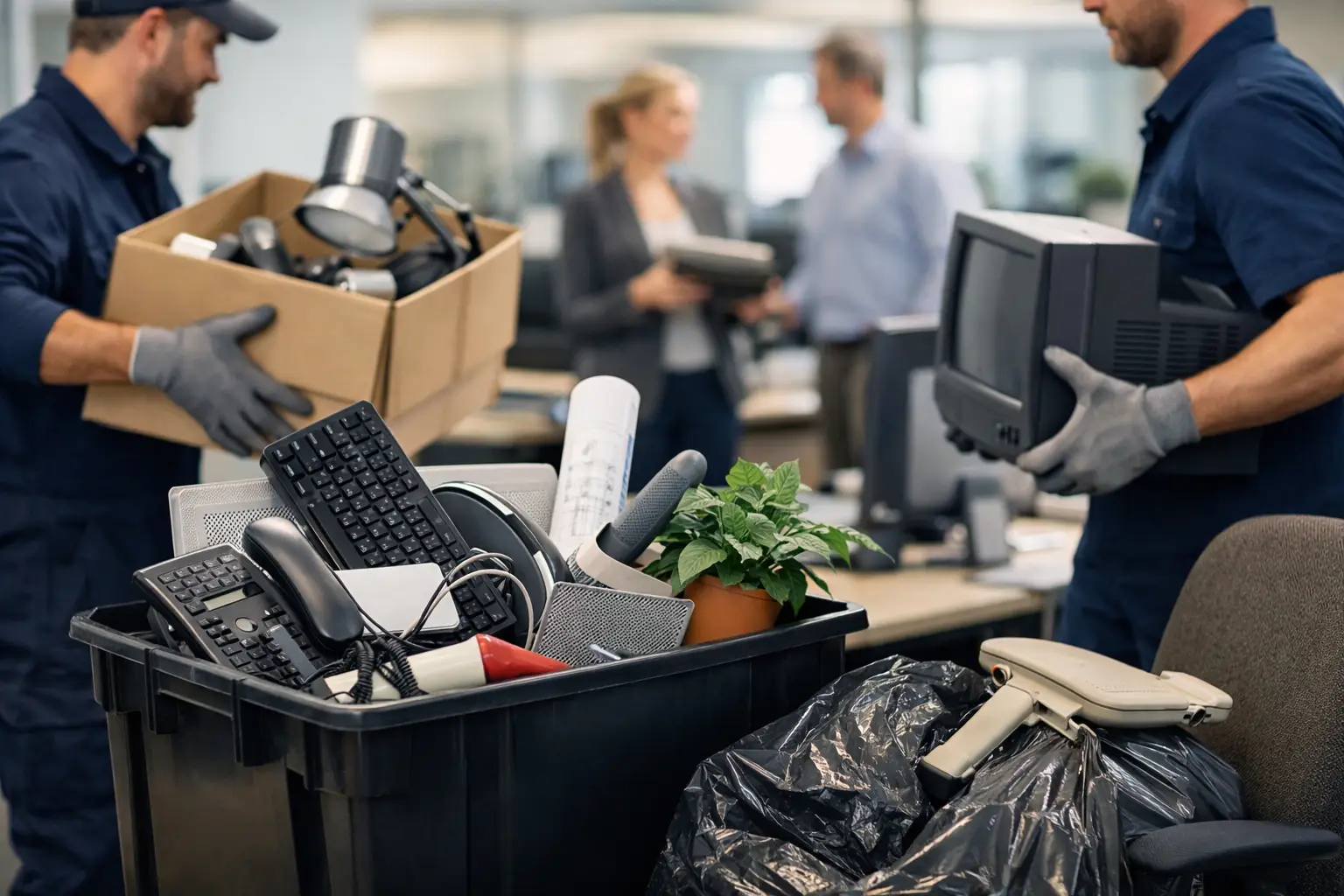
A back room full of broken chairs, old monitors stacked by the copier, file cabinets nobody has opened in years – most office clutter builds up slowly, then becomes a problem all at once. This office junk removal guide is built for business owners, office managers, property managers, and local teams who need the space cleared without turning it into a week-long disruption.
Office cleanouts are different from home junk pickup. You are not just getting rid of stuff. You are protecting workflow, making room for people and equipment, and avoiding the safety issues that come with overcrowded storage rooms, blocked walkways, and unwanted furniture. If you handle the job right, the office gets cleaner, more functional, and easier to manage. If you handle it poorly, you can lose time, frustrate staff, and create a mess in the middle of business hours.
Most offices hold a mix of items, which is why planning matters. One business may only need a few desks and chairs removed. Another may be dealing with years of leftover equipment, outdated cubicles, shelving, printers, boxes of records, and breakroom appliances that no longer work.
In many cases, office junk includes furniture, non-working electronics, packing materials, excess inventory, old décor, carpet scraps, renovation debris, and general bulk trash. Some jobs are simple pickups. Others look more like a full cleanout, especially after a move, remodel, downsizing, lease turnover, or ownership change.
The biggest mistake people make is assuming all office junk can go out with normal trash service. It usually cannot. Standard pickups are often too limited for bulky items, heavy loads, or large volumes. That is when a full-service crew saves time because they do the lifting, hauling, loading, and disposal coordination for you.
Before you schedule a pickup, walk the space with a clear goal. You do not need a complicated inventory. You just need to know what is staying, what is going, and what needs special handling.
Focus first on the obvious space-wasters. Broken furniture, outdated cubicle parts, unused storage cabinets, and extra desks are usually easy decisions. Then look at hidden areas like supply rooms, server closets, file rooms, and back hallways. That is where old equipment and forgotten junk tend to collect.
It also helps to group items by type. Furniture in one area, electronics in another, general trash in another. That makes the removal process faster and helps a crew give a more accurate estimate. If your office is still operating during the cleanout, grouping items in advance also limits disruption.
Not everything in an office should be treated the same way. Electronics may need separate handling. Confidential documents should be secured before any hauling begins. Refrigerators, microwaves, and breakroom equipment may be heavy and awkward to move through tight hallways. Large conference tables and cubicles may need to be disassembled.
This is where it helps to work with a crew that is used to commercial jobs. Office cleanouts often involve elevators, loading docks, narrow doorways, timing restrictions, and shared buildings. A team that handles this work regularly will think through those details before the first item is loaded.
The best office junk removal guide is not just about what to remove. It is about when and how to remove it with the least interruption.
If your business is open during the day, schedule the work around your busiest hours. Some offices prefer morning pickups before staff settle in. Others want late afternoon service so the team can work without noise or hallway traffic. If you manage a multi-tenant building, check access rules first. Some properties require reserved loading areas or limit move-out activity to certain windows.
For larger cleanouts, it may make sense to break the job into phases. Remove storage room junk first, then old furniture, then any leftover debris from reconfiguring the space. That approach works well when a business is reorganizing but cannot shut down completely.
A good local junk removal company should be able to adjust to that reality. Flexibility matters more than a one-size-fits-all process, especially for offices that need quick turnaround.
Some junk creates more problems than people realize. Old office chairs with torn backs and loose wheels are not just ugly. They take up room and can become a safety issue. Broken desks and unstable shelving make the workspace look neglected. Outdated electronics collect dust and often sit untouched because nobody is sure what to do with them.
There is also the issue of image. If clients, tenants, or employees walk past cluttered hallways and overloaded storage areas, it reflects on the business. A cleaner office feels better to work in and presents better to everyone who walks through the door.
That does not mean every item must go at once. Sometimes the smartest move is removing the biggest and least useful pieces first. Clearing out bulky furniture or piles of unused equipment can open up enough space to make the rest of the cleanup easier.
Sometimes a few-item pickup is enough. Other times the project is bigger than it first appears.
An office move is one common example. Once desks are emptied and furniture starts shifting, businesses often uncover years of leftover junk they do not want to bring to the new location. Lease turnovers are another. If a prior tenant leaves furniture, trash, equipment, or shelving behind, the property manager needs the space cleared quickly so the next tenant can move in.
Renovation work can create its own mess. Carpet removal, drywall scraps, packaging, old fixtures, and damaged furniture all add up fast. In those cases, you need a crew that can handle bulky loads and labor-heavy removal, not just curbside pickup.
This is also where local service makes a difference. A locally owned company like JBC Junk Removal can often respond faster, communicate more directly, and adjust to changing job conditions without the extra layers that come with a national franchise model.
Business owners usually want a straight answer on price, and that is fair. The challenge is that office junk removal is not priced by one simple rule.
The amount of material matters, but so does what the crew is removing. A stack of cardboard boxes is different from multiple solid wood desks. Access also affects labor. Ground-floor pickups are usually simpler than hauling heavy furniture down stairs or through elevators. Timing can matter too, especially if the work has to be done in a narrow window.
That is why free estimates are useful. They give you a clearer idea of cost based on the actual job, not a guess. If you are comparing options, look beyond the lowest number. Reliability, insured service, and showing up when promised matter just as much as price, especially when your office schedule is involved.
One office cleanout can solve an immediate problem, but some businesses benefit from a routine plan. Property managers, retail offices, service companies, and growing teams often end up with recurring bulk trash, packaging waste, old fixtures, or unwanted furniture. If clutter builds up every few months, regular removal can be more practical than waiting for another major cleanout.
That is especially true for businesses managing multiple units or turnover-heavy spaces. When junk is removed consistently, storage areas stay usable, common spaces stay safer, and staff spend less time trying to work around items that should have been hauled away weeks ago.
The goal is not perfection. It is keeping your workplace functional, presentable, and free from junk that steals space and slows people down.
The right approach depends on the size of the job, how quickly the space needs to be cleared, and whether your office is still operating during the work. A small professional office may only need a same-week furniture pickup. A property manager may need a full suite cleared after a tenant move-out. A contractor finishing an office remodel may need debris hauled out on a tighter schedule.
What matters most is working with a crew that listens, shows up on time, and does the heavy lifting without creating more work for you. Office cleanouts should feel straightforward. You point out what goes, the crew handles the labor, and your team gets the space back.
If your office has reached the point where broken furniture, outdated equipment, or back-room clutter is getting in the way, that is usually your sign to stop putting it off. A clean workspace gives people room to do their jobs, and sometimes the fastest way forward is simply getting the junk out.