
LaGrange, GA and The Surrounding Area

Have Questions? Email Us

7 AM – 6 PM
LaGrange, GA and The Surrounding Area
Have Questions? Email Us
7 AM – 6 PM
Call For A Free Estimate

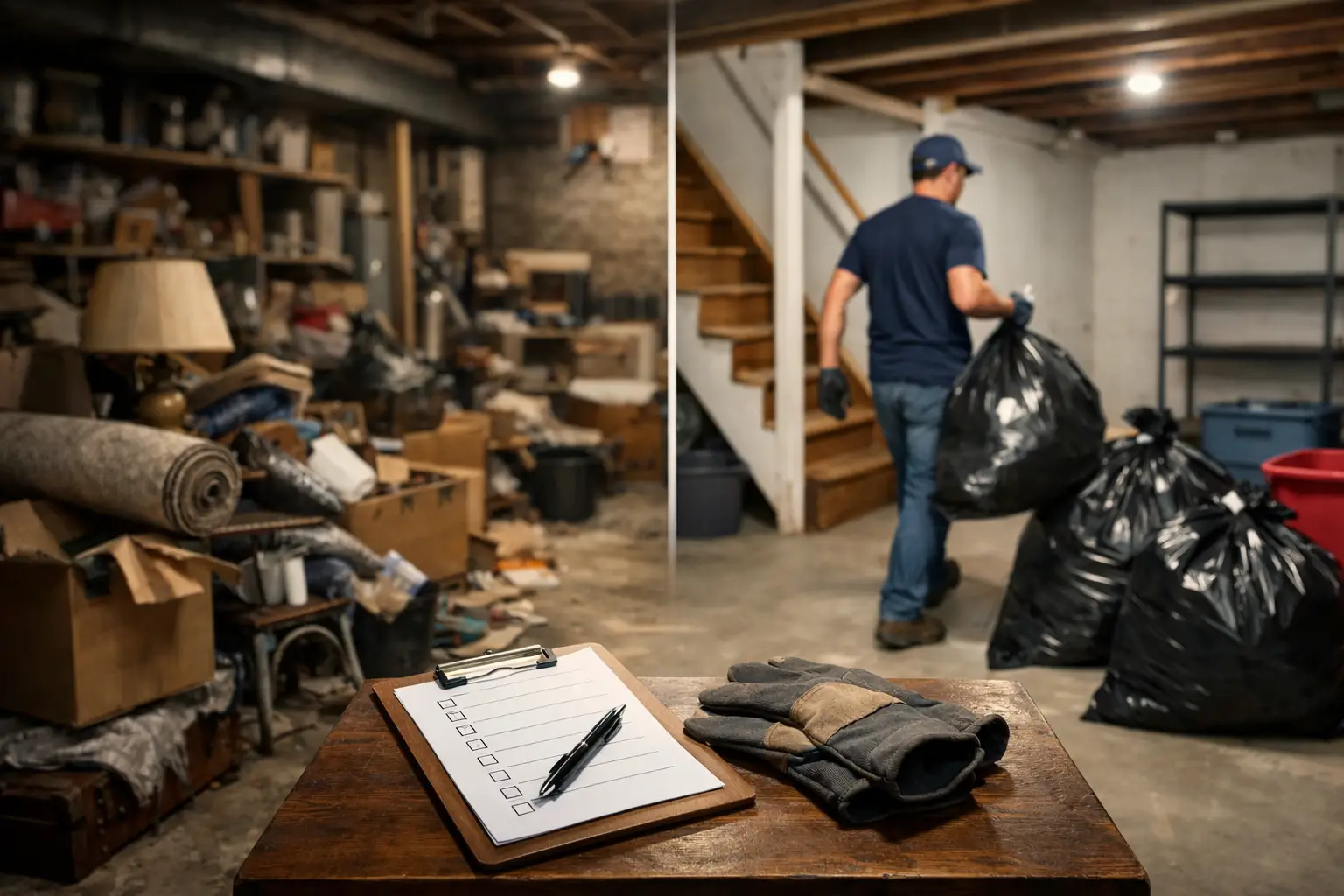
That basement corner stacked with old boxes, worn-out furniture, and mystery bins usually does not get better on its own. It gets harder to reach, harder to sort, and easier to put off. This basement junk removal checklist gives you a practical way to take back the space without turning a weekend cleanup into a bigger headache.
Before moving a single item, turn on every available light and take a slow look around. Basements can hide wet floors, loose nails, pest activity, mold, damaged shelves, and electrical cords under piles of belongings. Wear closed-toe shoes, work gloves, and a dust mask if the area is dusty or has been closed up for a long time.
Look for signs of water damage first. Cardboard boxes near a sump pump, water heater, foundation wall, or exterior door may be damp even when they look dry from above. Set aside anything affected by standing water, sewage backup, or visible mold. Those items often need to be discarded, but avoid stirring up moldy materials without proper protection.
If the basement is packed from wall to wall, do not try to create a path by climbing over piles. Clear a safe route from the stairs to the exit first. A clear walkway makes every later decision easier and gives a removal crew room to work safely.
You do not need a color-coded organization system to make progress. Pick four areas of the basement, or use labeled tarps and boxes, for items you plan to keep, donate, recycle, and remove. The goal is not to inspect every paperclip. The goal is to make clear decisions on the items taking up the most space.
For many homeowners, the toughest category is “keep.” If an item has not been used in years, has no realistic home upstairs, and would not be worth moving to a new house, it may be time to let it go. Sentimental items are different. Put those in a small review box and come back to them after the larger cleanout is finished.
Use this sorting checklist as you work through each section:
Do one zone at a time, such as the storage shelves, old workout equipment, holiday decorations, or the area around the water heater. Sorting the entire basement at once can feel overwhelming. Finishing one zone builds momentum.
Old basement boxes are famous for holding things people forgot they owned. Before putting a sealed box in the removal pile, open it and look for tax records, family photos, jewelry, military documents, birth certificates, property paperwork, and small valuables.
Give yourself a reasonable time limit. A quick check is smart. Reading every old greeting card from 1998 while the basement is half-cleared is usually not. Put personal papers and photographs in one protected spot to sort later, away from the junk removal area.
If you are cleaning out a family member’s home, an estate, or a rental property, slow down around filing cabinets, desks, and storage trunks. Those are common places for important documents and personal belongings. When several family members are involved, agree on who makes final decisions before hauling begins. That simple conversation can prevent a lot of frustration.
Not everything in a basement belongs in the regular trash. Some materials require special disposal because they can be hazardous, flammable, or restricted at local facilities. Set these aside in a clearly marked area and tell your junk removal company about them when requesting an estimate.
Common items requiring extra attention include:
Never combine chemicals or pour them down a drain just to clear shelf space. Keep original containers closed whenever possible. If a container is leaking, do not handle it casually. Place it where children and pets cannot reach it, ventilate the space if it is safe to do so, and contact the appropriate local disposal resource for guidance.
A little preparation can make a basement cleanout faster. Flatten empty cardboard boxes, bag loose trash, and place small items in sturdy containers. Take drawers out of heavy dressers when possible, and remove loose glass shelves from cabinets. These steps make items safer to carry and help you see how much needs to go.
Still, there is a line between helpful preparation and unnecessary hard labor. Do not risk an injury trying to drag an old sectional up basement stairs, dismantle a heavy entertainment center, or wrestle a water-damaged mattress through a narrow doorway. Large furniture, appliances, exercise equipment, and bulky debris are exactly the kinds of jobs a full-service removal crew is there to handle.
It also depends on the condition of the stairs. Narrow steps, low ceilings, tight turns, and slippery entrances can make even a small item difficult. Let the crew know about access issues ahead of time so they can plan for the job.
Once you know what is leaving, make the route from the basement to the truck as open as possible. Move vehicles from the driveway if needed, unlock gates, secure pets, and clear shoes, planters, or furniture from entryways. If you live in a neighborhood with limited parking or have a rental property with shared access, plan where the truck can safely park.
You do not have to haul everything outside unless you want to. Full-service junk removal means the crew can remove items from the basement, carry them out, load the truck, and clean up the area afterward. But a clear path saves time and helps keep walls, floors, and doorframes protected.
For landlords, property managers, and realtors, it helps to confirm that utilities are on if lighting is needed and that the crew has access to the property. A quick note about a lockbox, tenant move-out, steep basement steps, or a heavy item can prevent delays.
Basement cleanout pricing generally depends on how much space the items take up in the truck, what type of materials are involved, how heavy the load is, and how difficult access may be. A few bags and an old chair cost less to remove than a basement full of furniture, construction debris, and appliances.
Be honest when describing the job. Mention heavy items, hazardous materials, long carries, stairs, water damage, or a packed storage area. Accurate details help you receive a fair estimate and avoid surprises on pickup day.
Taking a few photos can also make the estimate process quicker, especially when you are managing a property from out of town or coordinating an estate cleanout. If the project is large, ask whether the company can complete the work in phases. That can be useful when you need to keep some items accessible while sorting the rest.
Once the unwanted items are gone, sweep the floor and check the walls, foundation, and storage areas for issues that clutter may have hidden. Look for moisture, pest entry points, damaged insulation, and anything that needs a repair before you fill the space again.
Then give the basement a job. It might become organized seasonal storage, a workshop, a home gym, or simply an open area that is easy to walk through. Use shelves and clear bins for the items you keep, and avoid putting new boxes directly on the floor where moisture can reach them.
If the basement cleanup has grown beyond what you can safely handle, JBC Junk Removal can do the lifting, loading, and hauling so you can focus on the next step. A clear basement is more than extra square footage. It is one less unfinished task waiting on you every time you head downstairs.