
LaGrange, GA and The Surrounding Area

Have Questions? Email Us

7 AM – 6 PM
LaGrange, GA and The Surrounding Area
Have Questions? Email Us
7 AM – 6 PM
Call For A Free Estimate

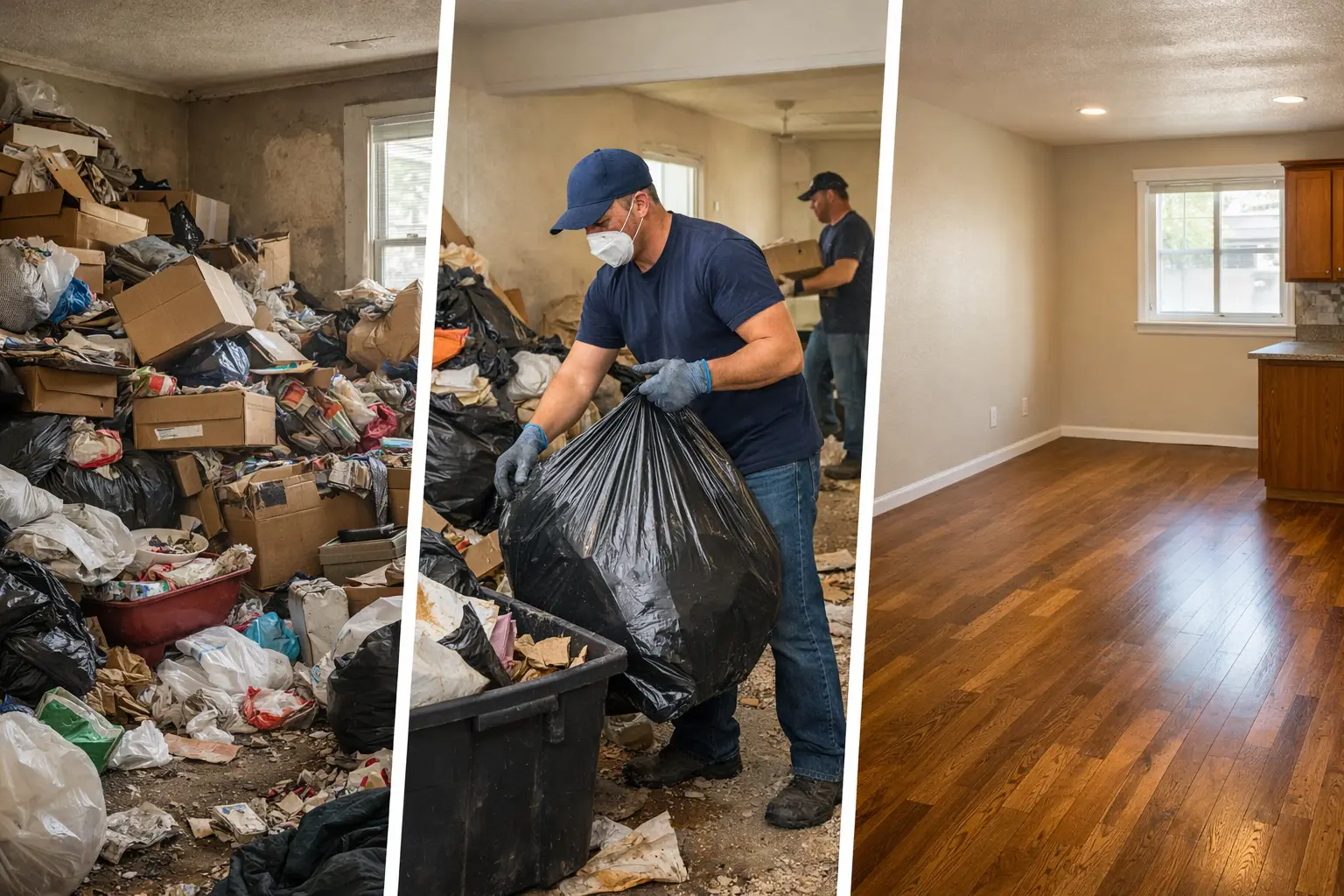
A hoarder house cleanup example can look overwhelming from the curb: packed rooms, blocked hallways, old furniture, bags of trash, and years of belongings with no clear place to start. But a large cleanout does not have to become an argument, a family crisis, or a week of unsafe lifting. With a calm plan and the right help, even a heavily cluttered property can move forward one room at a time.
This example shows what a respectful, practical cleanup may involve for a homeowner, family member, landlord, or realtor in LaGrange, Newnan, Hogansville, or the surrounding area.
Picture a three-bedroom home after a longtime resident has moved into assisted living. The family needs to prepare the house for sale, but the property is filled from floor to ceiling in several areas. The kitchen has expired food and unopened mail on the counters. One bedroom is mostly inaccessible because of stacked boxes and clothing. The garage contains broken tools, old paint cans, mattresses, and furniture. There is a clear walking path through the living room, but it is narrow and uneven.
The family may be tempted to rent a dumpster, open every bag, and start throwing things out. That works in some cases, but it can create more problems when the amount of material is large. Heavy loads, sharp objects, pests, spoiled food, and emotionally important belongings all need to be handled carefully.
A full-service cleanup crew begins by looking at the access points, the volume of items, and any safety concerns. A clear estimate should explain what will be removed, how labor and hauling are priced, and whether certain materials require separate disposal. This early walkthrough also helps the property owner decide what they want to keep, donate, recycle, or discard.
Safety comes before speed. In a crowded house, blocked exits, unstable stacks, weak flooring, broken glass, and animal waste can turn an ordinary cleanout into a risky job. The first goal is usually to create safe paths from the front door to the rooms being cleared and then to the truck.
That may mean removing obvious trash and loose debris near entrances, clearing stairs, and moving bulky items that could fall. Workers should wear proper gloves, sturdy footwear, and other protective gear suited to the condition of the property. If there are signs of mold, needles, human or animal waste, dead animals, or other biohazards, standard junk removal may not be enough. Those situations can require a specialized remediation company before regular hauling begins.
It also helps to shut off or avoid damaged appliances, check for water leaks, and make sure utility access is not blocked. A cleanup should never put people at risk just to finish faster.
A common fear is that important items will disappear in the cleanup. That is why sorting decisions should be made before the truck is loaded whenever possible. Family members often want to set aside documents, photographs, jewelry, military records, heirlooms, and financial paperwork. In an estate situation, this step can take more time than the actual hauling.
For the house in this example, the family creates a simple keep area near the dining room. Items marked for keeping go there as they are found. Everything else is separated into practical groups: donation-worthy household goods, recyclable materials, regular junk, and items that need special handling.
There is a trade-off here. Sorting every single object can add significant labor and delay a sale or move-out. Sorting nothing can lead to costly mistakes. The best approach depends on the family’s timeline, the property condition, and whether someone is available to make quick decisions during the job.
When a property is packed, the cleanup crew should follow a consistent order. Starting near the main entrance and completing one area before moving deeper into the home keeps walkways open and prevents cleared rooms from filling back up.
In this example, the team starts with the living room and hallway because they provide the main route through the house. Next comes the kitchen, where spoiled food and trash are removed promptly. The bedrooms follow, then the garage and outdoor areas. Large furniture is typically taken out after smaller loose items have been cleared, making it safer to move couches, mattresses, dressers, and appliances.
This room-by-room method also gives the owner visible progress early in the job. Seeing a usable living room or clear hallway can make a difficult situation feel manageable. It is more reassuring than having every room partly disturbed and none of them finished.
The haul-away portion may include old furniture, worn-out mattresses, bagged trash, boxes, clothing, kitchen items, broken electronics, carpeting, garage clutter, yard debris, and bulky appliances. Donation options may be available for clean, usable items, but they depend on condition and local acceptance rules. A good cleanup company will not promise that every item can be donated.
Paint, chemicals, propane tanks, gasoline, batteries, and certain electronics often have disposal rules that differ from ordinary household junk. Pointing these out during the estimate prevents surprises later. Honesty matters more than offering an unrealistically low price and adding charges at the end.
Junk removal and deep cleaning are related, but they are not the same service. Once the rooms are empty, the property may still need sweeping, vacuuming, odor treatment, appliance cleaning, carpet removal, repairs, pest control, or professional sanitation.
In the example home, clearing the kitchen reveals stained flooring and a damaged cabinet base. Removing garage clutter exposes water damage along one wall. Finding these issues is not bad news. It gives the family a real picture of what needs repair before listing the home or welcoming a new tenant.
For landlords and property managers, this is often the point where a turnover plan begins. After hauling is complete, maintenance crews can work without climbing over bags or moving abandoned furniture from room to room. For realtors, an empty property is easier to assess, photograph, repair, and show.
Hoarding-related cleanup can carry shame, grief, frustration, and conflict. The person who lived in the home may be attached to belongings that others see as trash. Family members may feel exhausted after years of trying to help. A professional crew should not make jokes, take photos without permission, or treat the property like a spectacle.
A respectful approach is simple: communicate clearly, ask before removing questionable items, protect the home where possible, and keep the work focused on the customer’s goals. If the resident is present and becomes overwhelmed, pause decisions that do not need to be made immediately. A cleanup can restore safe living space, but it does not replace medical, mental health, or family support when those are needed.
A small cleanup may be manageable with a few family members and a pickup truck. Professional help is usually worthwhile when there are multiple rooms of material, heavy furniture, tight deadlines, unsafe conditions, or no nearby family available to do the labor. It can also save time when a rental property, estate, foreclosure, or home sale needs to move quickly.
JBC Junk Removal provides hands-on cleanout help for West Georgia property owners who need unwanted items loaded, hauled away, and cleared without the hassle of doing it alone. A free estimate gives you a starting point before anyone lifts a box.
The first step does not have to be clearing the whole house. It can be opening one safe path, choosing one room, and getting a clear plan from a crew that shows up ready to work.