
LaGrange, GA and The Surrounding Area

Have Questions? Email Us

7 AM – 6 PM
LaGrange, GA and The Surrounding Area
Have Questions? Email Us
7 AM – 6 PM
Call For A Free Estimate

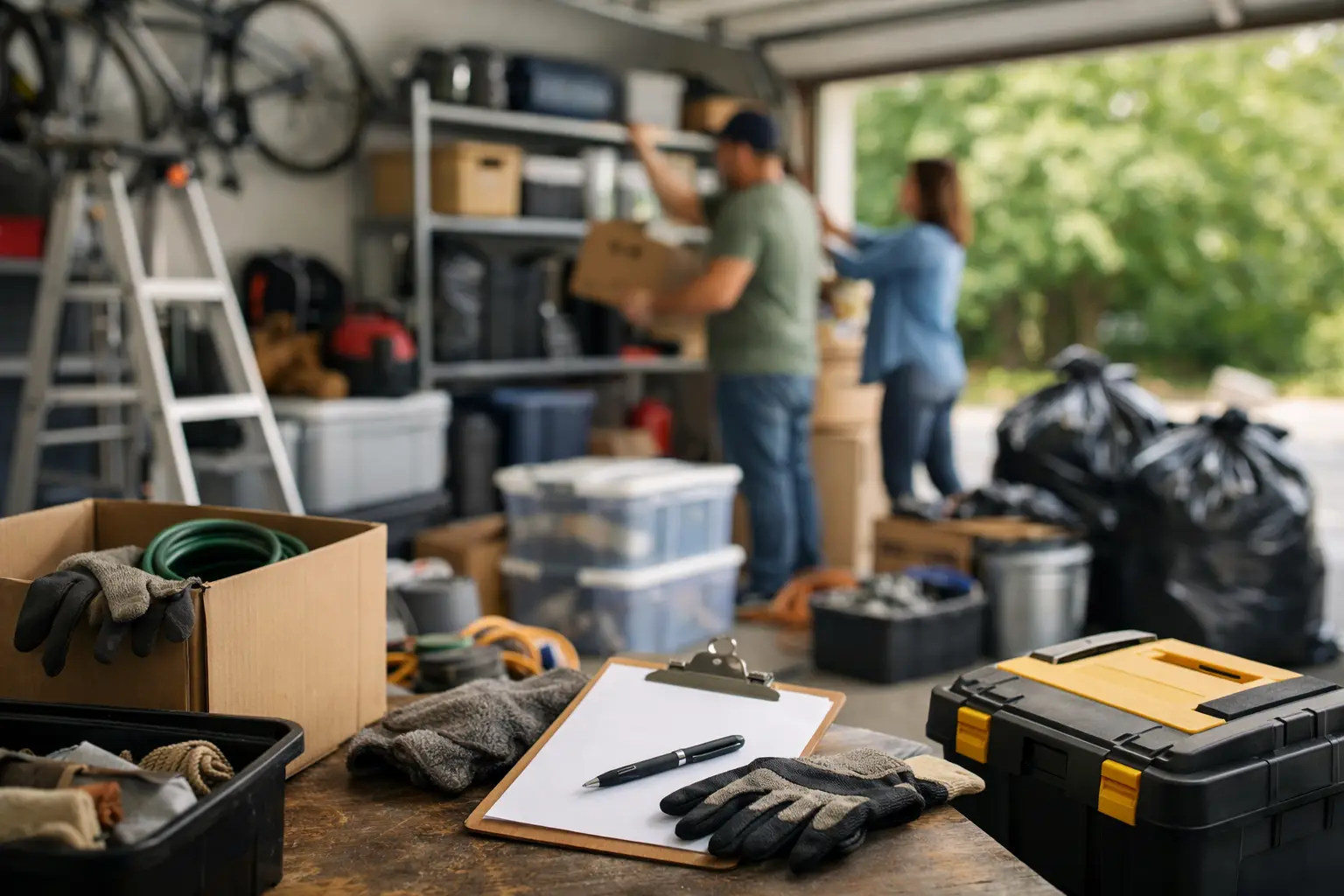
Most garage cleanouts do not fail because people are lazy. They fail because the job starts with good intentions and no real plan. A solid garage cleanout planning guide helps you avoid the usual mess – half-filled trash bags, keep piles that keep growing, and a garage that looks worse three hours later than it did when you started.
If your garage has turned into a holding area for old furniture, broken tools, paint cans, holiday bins, yard equipment, and boxes you have not opened in years, the fastest way forward is to make a few smart decisions before you touch anything. That saves time, cuts stress, and keeps the job from dragging into next weekend too.
A garage is one of the easiest places in a home to overload. It becomes storage, workshop, donation drop zone, and overflow closet all at once. That is why cleanouts often feel bigger than they looked from the driveway.
Planning matters because different items need different exits. Some can be trashed. Some should be donated. Some may need special disposal. Large, heavy, or awkward items might require hauling help. When you decide that up front, you spend less time moving the same stuff around over and over.
The other reason planning matters is momentum. Most people can handle a garage cleanout physically for a little while. What slows them down is decision fatigue. Every box becomes a debate. Every shelf turns into a memory project. A plan keeps the job moving.
Before you sort a single item, decide what you want the garage to do when the cleanout is done. That answer should guide every decision.
If you want room to park again, floor space is the priority. If you need the garage for tools and home projects, access and shelving matter more. If this is part of a move-out, estate cleanout, rental turnover, or foreclosure cleanup, speed may matter more than perfect organization.
That is where people get stuck. They try to clean and reorganize and decorate all at once. Keep it simple. First clear out what does not belong. Then decide how to store what stays.
One of the biggest mistakes in any garage cleanout planning guide is pretending the job will take two hours when it is clearly a full-day or multi-day project. Give yourself a timeline that matches the size of the problem.
A lightly cluttered single-car garage may be manageable in one focused session. A packed two-car garage with old appliances, damaged furniture, yard waste, and stacked boxes may need a full weekend or outside help. If you are dealing with an inherited property or a rental unit turnover, it may need to be cleared fast to stay on schedule.
Pick a day with enough daylight, enough energy, and enough help. If the weather is going to be rough, that matters too, especially if you need driveway space for sorting.
Do not overcomplicate the sorting system. Four zones are usually enough: keep, donate, trash, and heavy haul-away. If you add too many categories, the cleanout slows down and everything turns into a maybe pile.
Use open space in the driveway or one cleared section of the garage to stage items. Move through the garage in sections, not all at once. One wall, one shelving unit, or one corner at a time is usually the best approach.
This is also the point where honesty matters. If something has been broken for three years, it probably is not getting fixed. If you forgot you owned it, you probably do not need it. Garages fill up with delayed decisions. A cleanout works best when you finally make them.
Every garage is different, but some items show up again and again. Worn-out patio furniture, cardboard boxes weakened by moisture, leftover renovation scraps, old tires, broken shelving, outdated electronics, rusted exercise equipment, and random wood piles are common space killers.
Then there are the bulky items that slow down the whole job. A dead refrigerator in the corner, an old couch from the basement, a broken lawn mower, or mattresses leaned against the wall can eat up a lot of square footage. Those are often the items that make a garage feel unusable.
If you already know you have several bulky items, plan for removal early. There is no point organizing around junk that should be gone.
Some garage items need extra care. Paint, chemicals, fuels, cleaners, batteries, and similar materials should not just be tossed in with household trash without checking local rules. The same goes for certain electronics and appliances.
You also want to be careful with sharp tools, exposed nails, broken glass, and unstable stacked storage. A rushed cleanout can turn into an injury fast. Gloves, closed-toe shoes, and a clear walking path make a difference.
Dust, pests, and mildew are common in garages too. If boxes have signs of rodent damage or water exposure, it is often smarter to bag and remove them than spend time trying to salvage everything inside.
A good garage cleanout planning guide should be honest about this part. Not every cleanout makes sense as a DIY job.
If the clutter is moderate, the items are light, and you have time, handling it yourself may be fine. But if you are looking at a packed garage, heavy lifting, tight deadlines, or a property transition, professional help can save a lot of wear and tear.
That is especially true for landlords, property managers, realtors, and contractors. If a garage needs to be emptied before listing photos, a tenant move-in, or a renovation start date, speed matters. The cheapest option is not always the one that costs the least in the long run. Lost time has a price too.
For homeowners, outside help is often worth it when the physical labor is the main barrier. Plenty of people know exactly what they want gone. They just do not want to spend a full day wrestling heavy junk to the curb.
Once you start pulling things out, the garage can look worse before it looks better. That is normal. What matters is preventing the project from spreading into the whole property.
Finish one area before opening another. Bag loose trash as you go. Break down empty boxes right away. Keep the driveway from turning into a second clutter zone. If you are waiting on a haul-away pickup, stack those items together so they do not block the rest of the work.
It also helps to set decision rules. If an item is broken and not worth repairing, it goes. If you have duplicates and only use one, keep the better one. If you are storing something for someone else and they have not claimed it in months or years, it is time for a conversation.
The best time to organize a garage is after the unwanted items are out, not before. Once the space is cleared, you can see what storage you actually need.
Keep frequently used items easy to reach. Store seasonal bins together. Put yard tools where they can be grabbed quickly. Reserve higher shelves for lighter, less-used items. Leave some open space on purpose. A garage that is packed wall to wall on day one usually ends up cluttered again fast.
You do not need a showroom setup. You need a system that is easy to maintain. That might be basic shelving, a few labeled bins, and a rule that the floor stays mostly clear. Practical beats perfect every time.
For a lot of families, the real challenge is not knowing what to do. It is finding the time and energy to do it. That is why the smartest plan is usually the simplest one. Decide what the garage is for, sort in clear categories, remove junk quickly, and do not hold up the whole project over low-value stuff.
If the job has gotten too large, there is no shame in bringing in help. Local crews like JBC Junk Removal handle this kind of work every day, and sometimes the fastest path to a usable garage is letting somebody else do the heavy lifting.
A clean garage is not really about appearances. It is about getting space back that you already own, and making your home work better for everyday life.