
LaGrange, GA and The Surrounding Area

Have Questions? Email Us

7 AM – 6 PM
LaGrange, GA and The Surrounding Area
Have Questions? Email Us
7 AM – 6 PM
Call For A Free Estimate

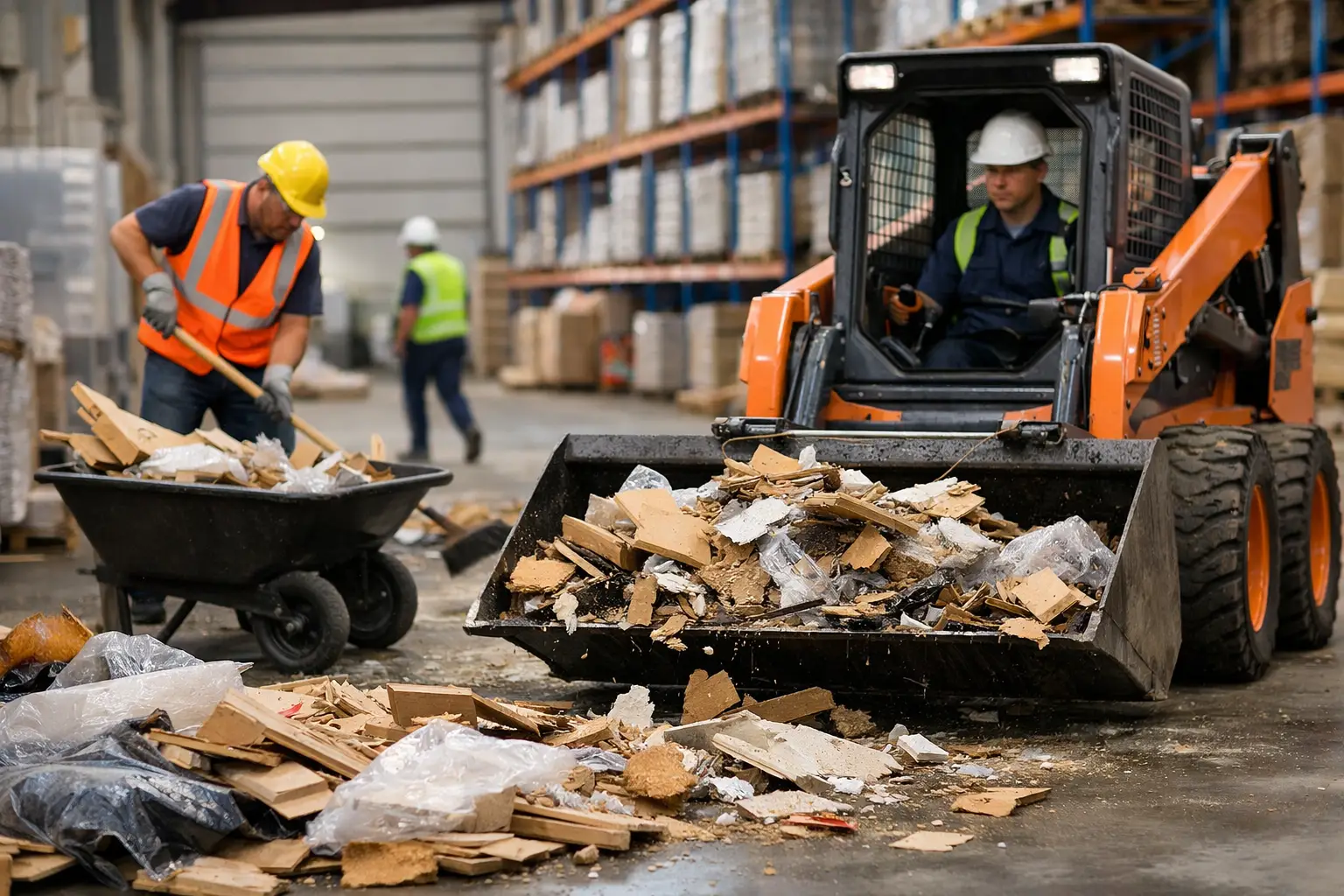
A warehouse can go from organized to overcrowded faster than most teams expect. Broken pallets, shrink wrap, damaged inventory, old shelving, packaging, and renovation scraps tend to collect in back corners until they begin taking up valuable floor space. Professional warehouse debris removal gives businesses a practical way to clear those materials out without pulling employees away from receiving, shipping, inventory, or customer orders.
For warehouse managers, contractors, and small business owners in West Georgia and East Alabama, the goal is not simply getting rid of junk. It is keeping the facility safe, usable, and ready for the next busy day.
Warehouse waste is rarely caused by one major event. More often, it comes from the daily work of moving products, replacing equipment, receiving freight, and making repairs. A few discarded pallets or a stack of empty boxes may not seem urgent at first. Over several weeks, though, those items can block staging areas, narrow travel paths, and make it harder to find what the team actually needs.
Busy facilities also face a common problem: employees know the debris needs to go, but no one has the time, truck, labor, or disposal plan to handle it. Asking warehouse staff to load heavy materials after a full shift can create safety risks and slow down operations. Renting a dumpster may work for some long-term projects, but it can be an unnecessary expense for a one-time cleanout or a smaller pile of bulky waste.
A full-service removal crew fills the gap. The crew does the lifting, loading, hauling, and cleanup, so your team can stay focused on the work that keeps the business moving.
Every facility has a different waste stream, which is why it helps to work with a removal company that can handle more than bagged trash. Warehouse debris removal commonly includes used pallets, cardboard, plastic wrap, packing foam, damaged furniture, old office equipment, shelving, racks, fixtures, bulk trash, construction debris, and non-hazardous scrap materials.
It can also be useful after a business relocation, lease turnover, renovation, equipment upgrade, inventory reset, or storm-related cleanup. If an old breakroom needs to be cleared before new furniture arrives, or a section of the warehouse needs to be opened for incoming inventory, a scheduled pickup can make that transition much easier.
Some materials require special handling or cannot be accepted with general junk. Hazardous chemicals, fuels, certain industrial liquids, medical waste, and regulated materials should be addressed through the proper disposal channel. A dependable removal provider will be straightforward about what can be hauled and help you plan around items that need separate service.
Debris takes up more than square footage. It can create trip hazards, interfere with forklift routes, limit emergency access, and make a facility look poorly maintained to employees, vendors, and clients. In a crowded warehouse, even a small obstruction can cause delays when workers are trying to move freight quickly and safely.
There is also an operational cost. When pallets, boxes, and obsolete equipment occupy usable space, businesses may end up storing active inventory in less convenient areas. That creates extra handling, more confusion, and wasted time during picking or receiving. Clearing out materials that no longer serve a purpose can make the entire floor easier to manage.
The right timing depends on your operation. A facility with regular deliveries and constant packaging waste may benefit from recurring pickup. A contractor finishing a warehouse renovation may only need one large haul-away. Either way, addressing the pile early is usually easier and more affordable than waiting until it becomes a full-scale cleanup.
You do not need to do all the hard work before the removal crew arrives. That is the point of hiring help. Still, a little preparation can make warehouse debris removal faster and keep the estimate accurate.
Start by identifying the items that are definitely leaving. If possible, separate active inventory, company records, and equipment that may be reused from the debris pile. Mark any items that must stay, especially when the cleanout is happening near storage racks or workstations.
Next, consider access. Let the removal team know whether debris is located at a loading dock, inside a storage room, on an upper level, or behind active work areas. Details such as parking access, gate codes, elevator use, dock availability, and required check-in procedures help prevent delays on pickup day.
Finally, schedule the work around your busiest periods. Many businesses prefer debris removal before opening, after major shipments have been processed, or during a planned maintenance window. A flexible local crew can often work with your schedule instead of forcing your operation to work around theirs.
Dumpsters have their place, particularly for long projects that generate debris every day. But they are not always the best fit for warehouse cleanup. You may have to arrange delivery, protect the placement area, load the container yourself, and pay for space that sits unused. If the dumpster is placed in a busy loading area, it can create its own access problem.
A full-service junk removal crew is often the better choice when the debris is already piled up and ready to go. The team arrives, loads the materials, sweeps up the area, and hauls everything away in one visit. This approach works especially well for old furniture, broken pallets, equipment, shelving, and other bulky items that are difficult to load without extra labor.
For businesses that have smaller but frequent piles, recurring service may be more practical than waiting for a major cleanup. Consistent pickup keeps clutter from becoming a safety issue and gives managers one less task to chase down.
Commercial cleanup requires more than a truck. You need a crew that shows up when promised, communicates clearly, and works carefully around employees, inventory, vehicles, and building access points. Licensed and insured service matters because warehouses are active work environments with real safety and scheduling demands.
Price should be clear, too. A free estimate gives you the opportunity to explain what needs to go, where it is located, and how quickly you need it removed. The best solution is not always the cheapest quote on paper. A missed appointment, unexpected extra charges, or a crew that leaves debris behind can cost far more than a fair, honest price from the start.
JBC Junk Removal provides fast, friendly, and affordable commercial cleanout service for businesses across LaGrange, Hogansville, Newnan, and nearby communities. As a locally owned team, we understand that a warehouse cleanup needs to be handled with as little disruption as possible.
Once the warehouse is clear, assign a simple holding area for materials waiting on pickup. Keep it away from exits, travel lanes, electrical panels, and active inventory. A designated spot makes it easier for employees to avoid mixing usable items with debris and lets management see when it is time to schedule service.
If your operation produces the same kinds of waste every week, create a routine rather than treating cleanup as an emergency. Regular removal of pallets, packaging, bulk trash, and broken fixtures helps preserve usable space and keeps the facility looking ready for business.
A clean warehouse supports safer work, smoother movement, and a more professional operation. When debris starts getting in the way, bringing in a hardworking local crew can turn a frustrating pile into a clear, usable workspace by the end of the day.